Introduction to Crust Fungi
Crust fungi (also known as corticioid fungi) are ecologically dynamic and exhibit remarkable morphological and evolutionary diversity. They occur in a wide range of habitats — in broadleaf and coniferous forests and wherever woody debris occurs — and can be found growing on the underside of sticks and logs, on tree bark, on leaves and forest duff, and even on rocks and lichens. While mushroom hunters often overlook crusts, fungal ecologists increasingly appreciate their importance for forest health and ecosystem functioning (Rosenthal et al. 2017, Anthony et al. 2022). Saprotrophic crusts decompose dead organic matter and are essential recyclers of nutrients in terrestrial ecosystems; parasitic crusts infect numerous other organisms, from agricultural crops to lichens and insects; mycorrhizal crusts are dominant soil symbionts in forests around the world, promoting tree growth and carbon sequestration; and some crusts form symbiotic associations with orchids, meaning we wouldn't have these awe-inspiring flowers without humble crusts.
I'll be the first to admit that crust fungi aren't the flashiest of organisms, nor are they the easiest to work with. They are usually small and inconspicuous, some nothing more than a sheen or different hue on the bottom of a small decaying branch. And no, they are not edible. However, some crusts take on wild textures and colors whose evolutionary purpose defies explanation. If you dare travel to the microscopic realm, you are greeted by truly bizarre structures like swollen oily cells, crystal-shrouded lances, and spiky clubs. To look into the microscope at a crust is to touch down on an extraterrestrial world with fractal geography and ornate constructions. In the study of crusts, you will broaden yourself as a mycologist and become acquainted with most of the taxonomic and microscopic diversity of basidiomycete fungi.
Morphological Definition of Corticioid Fungi
While crusts often speak for themselves, mycologists do have a technical definition for what constitutes a corticioid fungus. According to Larsson (2007), corticioid fungi are basidiomycetes with effused, resupinate basidiocarps; a smooth, merulioid, or hydnoid hymenophore; and holobasidia. However, I prefer the more expansive definition of Gorjón (2020), who defines crust fungi simply as "basidiomycete fungi in which basidiomes are generally resupinate". Under this broader view, crust fungi belong to the phylum Basidiomycota — the group of fungi that produce sexual spores on club-like structures called basidia — and make basidiocarps (reproductive structures or "mushrooms") that typically grow flat across the surface of a substrate. Beyond that, the hymenophore (the tissue underlying the hymenium, or spore-bearing surface) may be smooth or take more elaborate configurations such as bumps, folds, pores, or teeth to increase surface area. The basidiocarp may be entirely appressed to the surface or produce shelf-like outgrowths. It can be thin and wispy, thick and rubbery, or whatever it likes.
This broad definition naturally butts up against what mycologists refer to as stereoid fungi, a term used for fungi that produce caps with a primarily smooth hymenium, whether or not they also have some resupinate growth (resembling Stereum spp.). It also results in overlap with other form groups sometimes treated on their own, such as polypores. Finally, it includes fungi with septate basidia (heterobasidiomycetes), which were originally ignored by corticiologists because they were long considered a distinct taxonomic group. However, now we know that some heterobasidiomycete species belong to the core Agaricomycetes class (Hibbett et al. 2014). The resupinate fungi in these orders certainly look like crusts — why exclude them only after discovering under the microscope that they have septate basidia?
Ultimately, the best advice on what to call a crust may be that of Henrici (2000):
"It doesn't do to question too closely what is meant by a corticioid fungus. Any demarcation line will be arbitrary and the question of where to draw it is not one of importance. Once in however, it is a fascinating and rewarding field."
Convergent Evolution of the Corticioid Form
Despite their apparent simplicity, a precise definition of crust fungi is difficult to formulate because they are a form group (defined by a similar macromorphology) rather than a monophyletic group (defined by a shared evolutionary history). In the past, all crust fungi were thought of as closely related species and placed together in the family Corticiaceae — hence the term "corticioid", signifying an affinity to fungi in the family Corticiaceae. Nowadays, we can sequence an organism's DNA to more accurately determine its relatedness to other species. This has drastically changed fungal systematics as a whole and corticioid taxonomy in particular. Instead of belonging to just a single family, crust fungi are actually distributed across most of the 24 orders in the class Agaricomycetes, thoroughly intermixed with more familiar mushroom morphologies such as agarics, polypores, boletes, puffballs, and chanterelles (Binder et al. 2005, He et al. 2024, Hibbett et al. 2014, Zhao et al. 2017). Related to each of these very different types of mushrooms are crusts that, while superficially similar to one another, are actually only distantly related (Figure 1).
The contemporary diversity of mushroom forms in the Agaricomycetes is truly amazing, but if you were to go back far enough in time, crust fungi were all that there were. That's because Agaricomycetes descended from a crust-like ancestor (Sánchez-García et al. 2020). Over hundreds of millions of years, this group evolved extraordinary shapes, colors, and mechanisms of spore dispersal, but many lineages retained the crust form, and many others reverted back to this simple morphology (at least 96 times, according to the previously cited study). Crusts come and go again and again over evolutionary time like the kneading of dough. As a result, mycologists recognize a very large number of crusts (thousands of species) spread across more than 400 genera and 40 families (Gorjón 2020, Larsson 2007). About 1000 species of crust fungi are known to occur in Canada and the United States alone (Ginns 1998) — that's more species of crusts than species of birds! Given that we have documented less than 10% of all fungi and that relatively little attention has been devoted to crusts, especially in the tropics, the number of species of crust fungi is most definitely far greater.
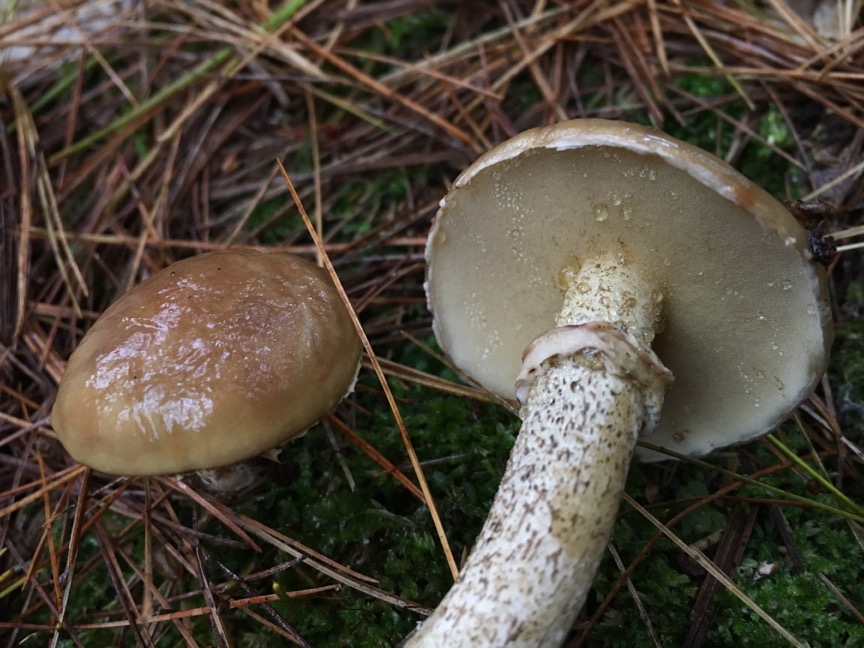
Boletales
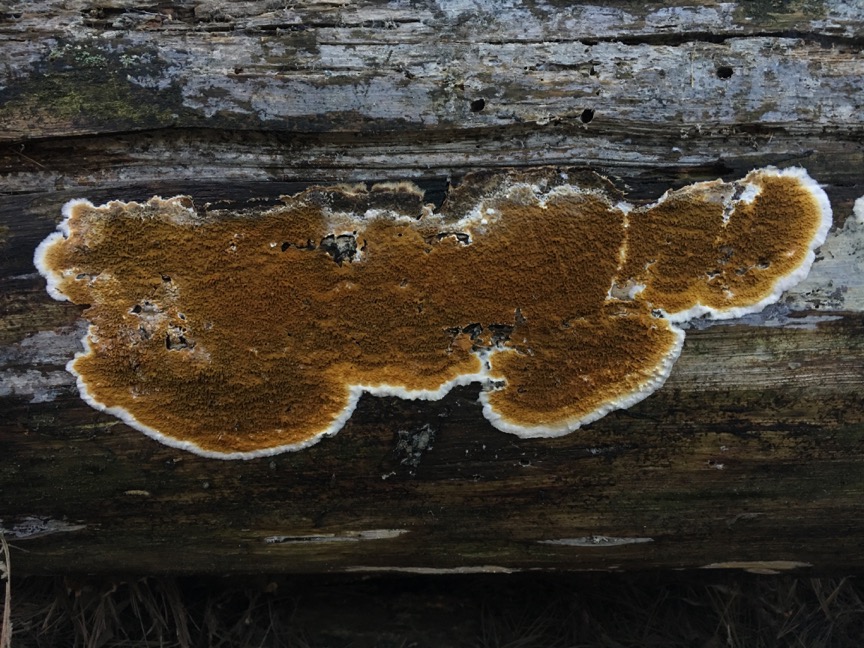
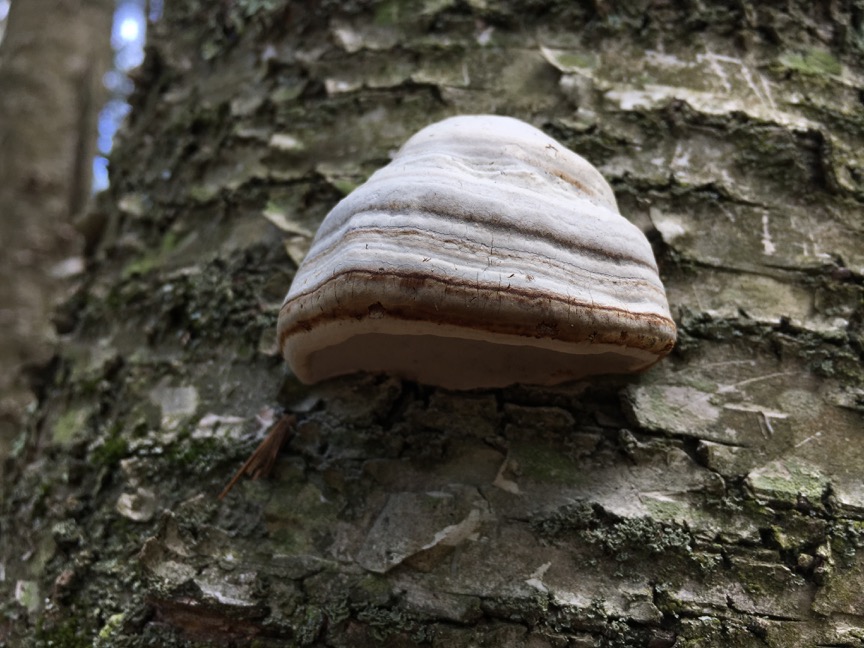
Polyporales
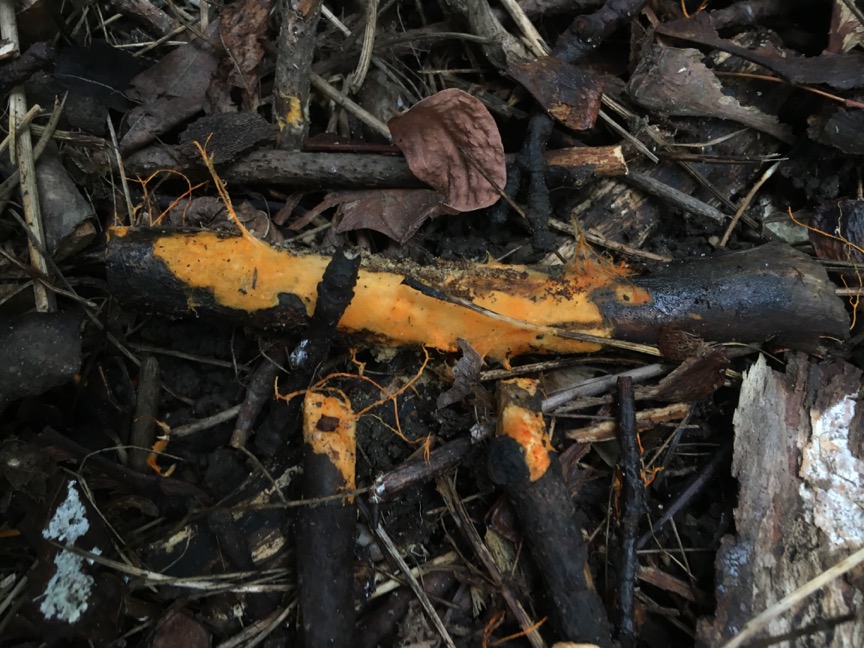
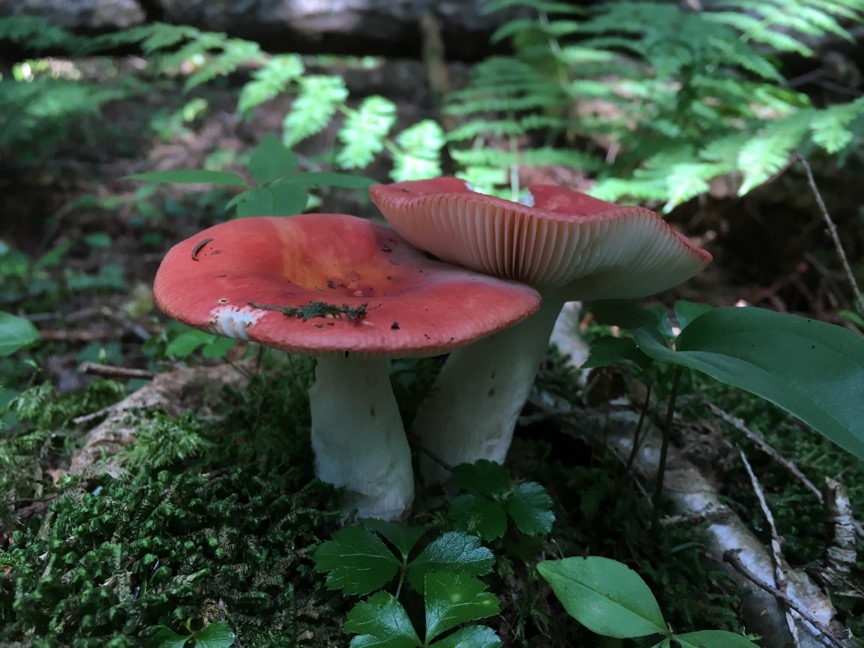
Russulales
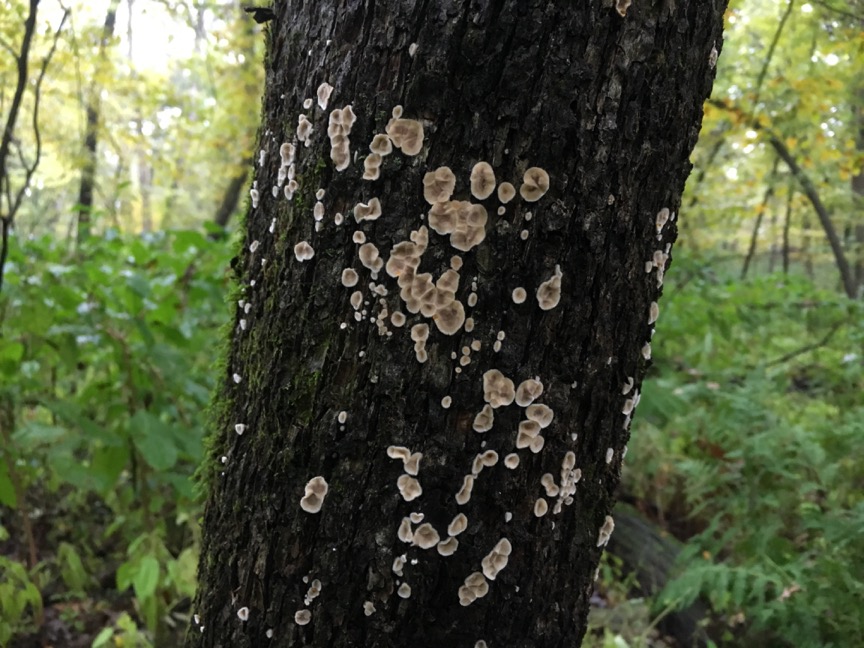
Figure 1. Boletales, Polyporales, and Russulales are taxonomic orders that we typically associate with non-corticioid mushrooms (boletes, polypores, and agarics, respectively) but actually contain corticioid fungi, demonstrating that crust fungi are sometimes only distantly related even if they have a similar morphology.
Mycologists Wanted
Why do I collect crusts and why should you? As a mycologist, I am curious about all the members of "Kindom" Fungi. When you start foraging, you invariably run into crusts and begin to wonder, "Who are you and what are you doing hiding under that log?" Not much accessible yet scientifically detailed information exists on the internet about crusts. I hope that CrustFungi.Com fills this niche so that curious individuals may better understand corticioid fungi. If you are interested in discovering new species or having a large contribution to the documentation of the biogeography and ecology of fungi, whether as a community scientist or professional mycologist, crusts certainly have a lot to offer.
Collecting and Studying Crusts
Unlike the meditative wanderings of mushroom hunters, crusts are most easily discovered by meticulously searching a single area with lots of fallen branches. While crust fungi might be visible on the tops of the branches, you'll find the greatest diversity by picking branches up and scanning the undersides. Log rolling is another fruitful method — you will be delighted by all the different organisms that grow and live on and under a large log, even when it is cold out. Success is maximized by looking under woody debris of multiple tree species, sizes, and stages of decay, as different crusts have different ecological and successional preferences, with newly fallen wood being the least interesting. The bark and dead branches of standing trees and shrubs are great places to find hardy species that don't mind drying out. More elusive species, like ectomycorrhizal crusts, often grow on the bottom of leaf debris and conifer duff and are surprisingly prevalent on the underside of rocks (scree or lapidicolous fungi). Wooden debris in wet areas like bogs, marshes, riverbeds, and sea shores (yes, there are marine crusts!) sometimes harbor very unique species. Other specialty crusts can be found on diverse substrates such as lichens, herbaceous debris, and dead ferns, which are particularly small, delicate, and understudied. Finally, human constructions such as wooden fences, posts, railings, and bridges also harbor small and rarely collected species (Hjortstam et al. 1973).
Macroscopic Traits
Many crusts are impossible to identify to species without microscopic study or DNA sequencing. I assume you have access to a compound microscope (one with up to 1000x magnification) in my comments below. If you do not have access to a microscope, some charismatic crusts can be identified by their macromorphology alone. Regardless, successful identification begins with close inspection of the crust and careful note-taking of its traits. When and where did you find it? What is the substrate, the type of associated rot if a wood-decay fungus (only a few genera produce brown rot, which makes identification of brown-rot crusts easier), and nearby trees? If it is not a "typical" crust growing on the underside of a branch or log, this is important to note. Then, what can you observe about the growth of the crust? Note the colors of the fruiting body, the hymenophore configuration, and its consistency. Make sure to also note what is going on along the expanding edge of the crust. Is the margin a distinct color from the rest of the fruiting body? How are the hyphae growing? Observation of these features is aided by a small hand lens or jeweler's loupe.
Once you have observed all these traits and photographed the crust in its fresh state, collect a sample for further study and preservation. A good knife is usually sufficient, but a small axe or saw may be necessary to handle hard wood. In whatever container you carry the specimen (plastic tackleboxes with adjustable walls work well), try to place the crust in the same orientation that it was growing. Basidiomycete fungi will often reorient themselves so that their spores fall in the same direction as gravity (try it out with gilled mushrooms — if placed horizontally, over a few hours they will magically curl over so that their gills are facing down). In the case of crust fungi, if placed upside down, the hyphae may start to grow into the spore-bearing surface resulting in a fuzzy appearance and challenging microscopy.
Spore Print
Back at home, you should attempt to get a spore print by putting the crust hymenium-side down on a piece of paper, glass slide, or aluminum foil and placing a damp paper towel or cloth on top overnight. The next morning, you may find a cloudy deposit of spores. Most crust fungi produce white spore prints, but you may collect some with spore prints that are more colorful. A spore print serves multiple purposes. For one, measuring spores will be a breeze: rather than tediously searching for spores in a squash mount, you have thousands that can be quickly scraped onto a slide and viewed and measured under the microscope. Second, the crust can be cultured from the spores for further study in the lab or to facilitate DNA sequencing. Third, some mycologists toss crusts that do not produce spore prints because these are likely to be infertile (without basidia or basidiospores), making morphological identification pretty much impossible. Crusts should be dried at room temperature or in a dehydrator at low temperature (approximately 95 ˚F) as soon as possible after collection and acquiring a spore print. The specimens should be totally dried before storage but should not be exposed to extreme temperatures in the dehydration process as this will modify or damage the microscopic structures and DNA.
Microscopic Traits
It is important to mention that you do not need to do microscopy on crusts when they are fresh (so-called vital taxonomy). In fact, crust species are described after being dried and therefore it is possible identification will be thrown off by unaccounted-for differences of the fungus in the fresh state. Depending on the thickness or hardness of the crust, a vertical section or scraping can be made. For more robust crusts, cut as thin of a section of the crust as possible with a single-edge razor blade, ideally under a dissection microscope. A good section will be so thin that it curls like a pencil shaving and include all layers of the fruiting body, from the substrate to the hymenium. Transfer the section to a drop of mounting medium on a glass slide, place a cover slip on top, and gently tap with a pencil eraser. For thin or otherwise insubstantial crusts, a scraping can be made by first dipping the razor blade in the mounting medium and then touching the razor blade to the crust to wet a small area. Scrape or cut a small amount of tissue and transfer to the drop on the slide. Various mounting media and stains can be used, and each is good for its own purposes. If the section or scraping is thoroughly crushed by putting pressure on the cover slip, this is referred to as a "squash mount".
Now that you have prepared a slide, observe the thickness and makeup of the different layers of the crust. This is best accomplished with a very thin, full section of the fruiting body that has not been crushed. Following that, make notes and measurements of the following traits, which are crucial for identification (and often easier to observe after thoroughly squashing the tissue): hyphal system and clamp connections; number of sterigmata on the basidia and basidia shape and size; basidiospore shape, size, ornamentation, and chemical reactions; and sterile structures such as cystidia. Often, multiple slides will have to be prepared from different parts of the crust to observe all these different features. It is also usually necessary to observe these traits in different media. For example, KOH stained with phloxine B is a good default mounting medium, but Melzer's reagent is necessary to observe amyloidy of spores or other structures, and water may be necessary to accurately observe traits that dissolve in KOH (like halocystidia).
DNA Sequencing
Background on DNA Barcoding
DNA barcoding is becoming a routine and standard part of the metadata attached to vouchered fungal specimens. To be clear, "DNA sequencing" refers to the "reading" of the order of base pairs or nucleotides (A, C, T, or G) that make up an organism's genetic code; "barcoding" refers to the sequencing of a specific genetic region that is useful for identification at the species level (like scanning a PLU code on a food item in a grocery store). What's so useful about sequence data, or why do we care to sequence the DNA of fungi? Each nucleotide serves as a character that can be used to understand how two specimens are related. So if you have a DNA sequence consisting of 700 nucleotides, you have 700 characters to work with, in addition to standard morphological ones. With morphology alone, we have far fewer characters for comparison (try to come up with even twenty morphological traits)! DNA data stabilize identification as species concepts and nomenclature evolve, and they can be stored in databases for rapid data analysis. Finally, DNA data cut through morphological similarities to which we assign undue importance in species descriptions — ones that are either variable within a species or convergently evolved — to get at the true evolutionary history of a set of taxa.
While many DNA barcoding regions exist and all are useful in some circumstances, the universal fungal barcode is the internal transcribed spacer (ITS) region of the nuclear ribosomal DNA (rDNA) (Schoch et al. 2012). Ribosomal DNA is the DNA that is transcribed into ribosomal RNA, which is assembled into ribosomes, the molecular machinery that makes proteins in all living organisms. So every living thing has rDNA! The ITS region is a section of DNA that is transcribed along with the rDNA but is then cleaved out. In other words, it is a spacer region that never becomes a functional product. Since it is not encoding for anything, the ITS rapidly accumulates mutations without affecting the functioning of the cell. These mutations, or changes in nucleotide sequence composition, are useful for distinguishing different species. An ITS similarity of > 97–98% is a standard conservative cutoff for determining whether two individuals belong to the same species, although this value differs across groups.
Provisional Species Codes
Mycologists estimate that there are a total of 2.5 million fungal species on Earth, but we have formally studied and described only 200,000 of them. This means that more than 90% of fungal species are unknown to us! Given such vast unexplored biodiversity, it's no wonder that DNA barcoding is uncovering many taxa to which we cannot reliably assign species names. To maintain scientific communication while taxonomic studies catch up, we refer to these "known unknowns" with provisional species codes. An example on this site is Xenasmatella sp. 'NJ01', a species first documented with sequence data from New Jersey. The "sp." and text in single quotes indicate this is a provisional species code, a temporary name assignment to a formally unnamed species. In this case, this is likely an undescribed species. Another example is Byssocorticium sp. 'atrovirens-IN01'. Initially documented from Indiana, this provisional species code also indicates a close relationship to Byssocorticium atrovirens, a European species. In this example, this is a species complex and the American population is a distinct species that requires its own scientific name. Provisional species codes are widely used to keep track of unnamed species on iNaturalist, Mushroom Observer, and GenBank, and are used on this site as well. To learn more about this topic, check out Steve Russell's informative Substack post.
Sequencing Your Specimens
Even for individuals without access to a professional mycology lab, DNA sequencing is becoming more accessible every day. The cost of DNA sequencing is always declining and there are more opportunities than ever for free or reduced-cost sequencing. For the most intrepid community scientists, one can assemble a barebones but functional sequencing lab at home: check out Sigrid Jakob's YouTube tutorials if you're up to the challenge. Most community scientists will want to take advantage of third-party sequencing services. For individuals in North America, Stephen Russell's Mycota Lab offers the easiest access to free DNA barcoding. Residents in select states can send an unlimited number of specimens anytime of the year (check which ones here). For everyone else, Mycota hosts continental mycoblitzes three times a year where anyone anywhere in North America can send an unlimited number of specimens for free DNA barcoding. The next one runs from July 31 to August 9, 2026. Get those crusts sequenced!
Resources
Literature
The first true compendium of crust fungi was Hyménomycètes de France by Bourdot and Galzin, published in 1928. Around 50 years later, The Corticiaceae of Europe in eight volumes (1973-1988) by Eriksson, Ryvarden, and colleagues became the new standard for corticiology. Today, Fungi Europaei, Volume 12: Corticiaceae s.l. (2010) by Bernicchia and Gorjón is the most useful reference available, even outside of Europe. While general treatments of North American crusts are relatively scarce, The Resupinate Non-poroid Aphyllophorales of the Temperate Northern Hemisphere (1980) by Jülich and Stalpers contains some good information, and Stereoid Fungi of America (2010) by Ryvarden discusses many crusty fungi as well.
Online
For assistance in identification, general questions related to crust fungi, and community support, I recommend you join the Crust Fungi and Polypores Facebook group. With over 9000 members from across the globe, including some of the world's foremost corticiologists, it is an amazing forum to share and learn about crusts. Other useful online resources related to crust fungi include Elia Martini's very excellent website dedicated to Crusts and Jells, Patrick R. Leacock's MycoGuide of fungi of the Midwest and America (which does a superb job covering crusts), Michael Kuo's MushroomExpert.Com, Danny Miller's pictorial key to Pacific Northwest crusts, First Nature's British bracket and crust fungi gallery, and a key to English crusts by the Hampshire Fungus Recording Group.
References
-
Anthony MA, Crowther TW, Linde S van der, Suz LM, Bidartondo MI, Cox F, Schaub M, Rautio P, Ferretti M, Vesterdal L, De Vos B, Dettwiler M, Eickenscheidt N, Schmitz A, Meesenburg H, Andreae H, Jacob F, Dietrich H-P, Waldner P, Gessler A, Frey B, Schramm O, Bulk P van den, Hensen A, Averill C. 2022. Forest tree growth is linked to mycorrhizal fungal composition and function across Europe. The ISME Journal 16:1327–1336. PDF Link
-
Binder M, Hibbett DS, Larsson K, Larsson E, Langer E, Langer G. 2005. The phylogenetic distribution of resupinate forms across the major clades of mushroom‐forming fungi (Homobasidiomycetes). Systematics and Biodiversity 3:113–157. PDF Link
-
Ginns J. 1998. How many species are there? Folia Cryptogamica Estonica 33:29–33. PDF
-
Gorjón SP. 2020. Genera of corticioid fungi: keys, nomenclature and taxonomy. Studies in Fungi 5:125–309. PDF Link
-
He M-Q, Cao B, Liu F, Boekhout T, Denchev TT, Schoutteten N, Denchev CM, Kemler M, Gorjón SP, Begerow D, Valenzuela R, Davoodian N, Niskanen T, Vizzini A, Redhead SA, Ramírez-Cruz V, Papp V, Dudka VA, Dutta AK, García-Sandoval R, Liu X-Z, Kijpornyongpan T, Savchenko A, Tedersoo L, Theelen B, Trierveiler-Pereira L, Wu F, Zamora JC, Zeng X-Y, et al. 2024. Phylogenomics, divergence times and notes of orders in Basidiomycota. Fungal Diversity 126:127–406. Link
-
Henrici A. 2000. An introduction to corticioid fungi. Field Mycology 1:12–19. PDF Link
-
Hibbett DS, Bauer R, Binder M, Giachini AJ, Hosaka K, Justo A, Larsson E, Larsson KH, Lawrey JD, Miettinen O, Nagy LG, Nilsson RH, Weiss M, Thorn RG. 2014. 14 Agaricomycetes. In: D.J. McLaughlin, and J.W. Spatafora, eds. Systematics and Evolution: Part A. Berlin, Heidelberg: Springer. p. 373–429. PDF Link
-
Hjortstam K, Larsson K-H, Ryvarden L. 1973. The Corticiaceae of North Europe Volume 1: Introduction and Keys. Oslo, Norway: Fungiflora. Link
-
Larsson K-H. 2007. Re-thinking the classification of corticioid fungi. Mycological Research 111:1040–1063. PDF Link
-
Rosenthal LM, Larsson K-H, Branco S, Chung JA, Glassman SI, Liao H-L, Peay KG, Smith DP, Talbot JM, Taylor JW, Vellinga EC, Vilgalys R, Bruns TD. 2017. Survey of corticioid fungi in North American pinaceous forests reveals hyperdiversity, underpopulated sequence databases, and species that are potentially ectomycorrhizal. Mycologia 109:115–127. PDF Link
-
Sánchez-García M, Ryberg M, Khan FK, Varga T, Nagy LG, Hibbett DS. 2020. Fruiting body form, not nutritional mode, is the major driver of diversification in mushroom-forming fungi. Proceedings of the National Academy of Sciences 117:32528–32534. PDF Link
-
Schoch CL, Seifert KA, Huhndorf S, Robert V, Spouge JL, Levesque CA, Chen W, Fungal Barcoding Consortium, Fungal Barcoding Consortium Author List, Bolchacova E, Voigt K, Crous PW, Miller AN, Wingfield MJ, Aime MC, An K-D, Bai F-Y, Barreto RW, Begerow D, Bergeron M-J, Blackwell M, Boekhout T, Bogale M, Boonyuen N, Burgaz AR, Buyck B, Cai L, Cai Q, Cardinali G, et al. 2012. Nuclear ribosomal internal transcribed spacer (ITS) region as a universal DNA barcode marker for Fungi. Proceedings of the National Academy of Sciences 109:6241–6246. PDF Link
-
Zhao R-L, Li G-J, Sánchez-Ramírez S, Stata M, Yang Z-L, Wu G, Dai Y-C, He S-H, Cui B-K, Zhou J-L, Wu F, He M-Q, Moncalvo J-M, Hyde KD. 2017. A six-gene phylogenetic overview of Basidiomycota and allied phyla with estimated divergence times of higher taxa and a phyloproteomics perspective. Fungal Diversity 84:43–74. PDF Link